
Introduction

Film is a visual medium, yet many movies rely too heavily on dialogue to convey information.
The principle of "show, don't tell" is one of the most fundamental rules in filmmaking — and one of the most frequently broken.
Instead of having characters explain their feelings, motivations, or backstories through dialogue, great filmmakers use images, actions, and visual cues to communicate meaning.
But what exactly does "show, don't tell" mean? How do filmmakers apply it? And why is visual storytelling so much more powerful than exposition?
Let's explore this essential principle of cinema.
What Does "Show, Don't Tell" Mean?

"Show, don't tell" means conveying information through visual storytelling rather than explicit dialogue or narration.
Instead of a character saying "I'm angry," the filmmaker shows clenched fists, a tense jaw, or objects being thrown.
Instead of explaining a character's poverty, the film shows worn clothing, empty cupboards, or unpaid bills.
This principle respects the audience's intelligence and creates a more immersive, emotionally engaging experience.
Why Visual Storytelling Is More Powerful
Visual storytelling engages audiences on a deeper level than exposition.
1. Creates Active Viewing
When information is shown rather than told, audiences must actively interpret what they see, making them more engaged.
2. Builds Emotional Connection
Seeing a character's pain through their actions is more emotionally impactful than hearing them describe it.
3. Respects the Audience
Showing trusts viewers to understand subtext and draw conclusions, while telling assumes they need everything explained.
4. Utilizes Cinema's Strengths
Film is a visual medium. Using images, composition, lighting, and movement plays to cinema's unique strengths.
Techniques for Showing Instead of Telling
Filmmakers use various techniques to show rather than tell.
1. Body Language and Performance
Actors convey emotion through facial expressions, posture, and movement.
Example:
There Will Be Blood — Daniel Plainview's greed and isolation are shown through Daniel Day-Lewis's physical performance, not dialogue.
2. Visual Symbolism
Objects, colors, and imagery represent abstract concepts or emotional states.
Example:
American Beauty — The plastic bag floating in the wind symbolizes beauty in unexpected places without anyone explaining it.
3. Environmental Storytelling
The setting, props, and production design reveal character and story.
Example:
Parasite — The contrast between the cramped semi-basement and the spacious Park house visually communicates class disparity.
4. Cinematography and Framing
Camera angles, composition, and movement convey power dynamics, isolation, or intimacy.
Example:
The Social Network — Mark Zuckerberg is often framed alone or separated from others, showing his isolation.
5. Editing and Juxtaposition
Cutting between images creates meaning through contrast or connection.
Example:
The Godfather — The baptism scene intercuts religious ceremony with violent murders, showing Michael's dual nature.
6. Sound Design and Music
Audio cues convey mood, tension, or emotional state without words.
Example:
A Quiet Place — The absence of sound creates tension and shows the characters' constant fear.
Famous Examples of "Show, Don't Tell"
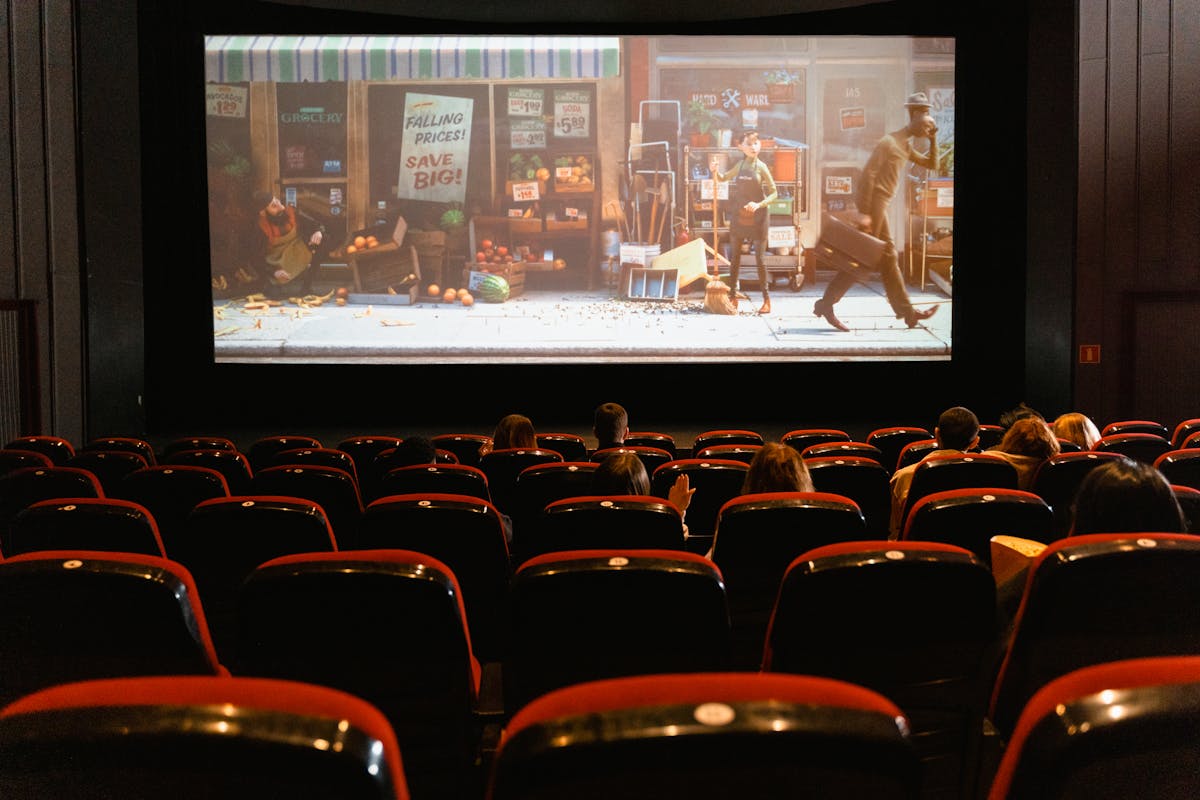
Let's examine how great films use visual storytelling.
Up (2009) — The Opening Montage
The first ten minutes of Up tell Carl and Ellie's entire love story without dialogue, using only images and music.
We see their marriage, dreams, struggles, and loss — all communicated visually, creating one of cinema's most emotional sequences.
Mad Max: Fury Road (2015)
This film uses minimal dialogue, relying on action, visuals, and character behavior to tell its story.
Max's trauma is shown through flashbacks and his cautious behavior, not explained through exposition.
The Shawshank Redemption (1994)
When Andy escapes, the film doesn't explain his plan through dialogue. Instead, it reveals the escape visually — the poster, the tunnel, the crawl through the pipe.
The audience discovers the truth alongside the warden, making the moment more powerful.
Wall-E (2008)
The first act has almost no dialogue, yet we understand Wall-E's loneliness, curiosity, and personality through his actions and the world around him.
No Country for Old Men (2007)
Anton Chigurh's menace is shown through his calm demeanor, methodical violence, and the fear he inspires in others, not through villain monologues.
When "Telling" Is Necessary

While "show, don't tell" is a powerful principle, there are times when telling is appropriate.
1. Complex Information
Some plot details or technical information are difficult to convey visually and require explanation.
2. Pacing
Sometimes a quick line of dialogue is more efficient than a lengthy visual sequence.
3. Character Voice
Dialogue reveals personality, wit, and how characters think, which is valuable in its own right.
4. Thematic Exploration
Philosophical or thematic ideas sometimes benefit from articulation through dialogue.
The key is balance — using dialogue when necessary but defaulting to visual storytelling when possible.
Common Mistakes: Telling Instead of Showing

Many films fall into the trap of over-explaining.
1. Exposition Dumps
Characters explain backstory or plot details in unnatural dialogue.
Bad Example: "As you know, your father, the king, was murdered five years ago..."
2. Stating Emotions
Characters announce their feelings instead of expressing them through behavior.
Bad Example: "I'm so angry right now!"
3. Unnecessary Narration
Voiceover that describes what we're already seeing on screen.
4. On-the-Nose Dialogue
Characters explicitly state themes or meanings that should be implicit.
How to Apply "Show, Don't Tell" in Screenwriting
Writers can strengthen their scripts by following these principles:
1. Cut Unnecessary Dialogue
Review every line and ask: "Can this be shown instead of said?"
2. Use Action Lines
Describe what characters do, not just what they say.
3. Trust the Audience
Don't over-explain. Viewers are smart enough to understand subtext.
4. Think Visually
Consider how each scene can be told through images, not just words.
5. Collaborate with Directors and Cinematographers
Visual storytelling is a team effort involving writing, direction, and cinematography.
The Role of Subtext
"Show, don't tell" relies heavily on subtext — the unspoken meaning beneath dialogue and action.
Great films communicate through what is not said, allowing audiences to read between the lines.
Example:
In Lost in Translation, Bob and Charlotte's final whispered conversation is inaudible to the audience, but we understand the emotional weight through their expressions and body language.
Visual Storytelling Across Genres
Different genres use "show, don't tell" in unique ways.
Action Films: Character is revealed through how they fight, move, and react under pressure.
Horror: Fear is shown through lighting, sound, and what is not shown.
Drama: Emotional states are conveyed through performance and visual metaphor.
Science Fiction: World-building happens through production design and environmental details.
Conclusion: The Power of Visual Cinema
"Show, don't tell" is more than a rule — it's a philosophy that honors cinema as a visual art form.
By trusting images over words, filmmakers create more immersive, emotionally resonant, and intellectually engaging stories.
The best films don't just tell us what to think or feel — they show us, allowing us to experience the story firsthand.
At PlotArmour, we celebrate the craft of storytelling and the techniques that make cinema unforgettable. From visual language to narrative structure, we explore the art behind the stories that move us.
Because in the end, a picture is worth a thousand words — and in cinema, the right image can say everything.